Ordering metal 3D prints for the 1st (and 2nd) time
JLCPCB’s 3D printing services offer metal 3D printing, which I wanted to try for some time. Since I got a coupon for it, I finally made an order. The model I wanted to print is a frame for a 1/87 scale truck. The model would benefit from extra weight and of course, compared to resin, metal frame is much more durable.
Requirements and review process
There are 2 metal printing processes offered by JLC3DP, SLM (selective laser melting) and BJ (binder jetting). The materials available are titanium and 316 steel.
BJ is a bit cheaper, but, as JLC technicians told me, is not suitable for such small and detailed models, so I switched to SLM.
Please kindly note that this model structure is not suitable for printing BJ-316 material, which is prone to breakage. It is recommended to switch to SLM process.
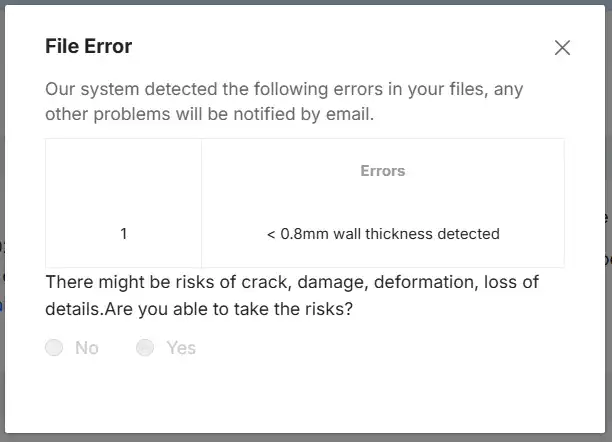
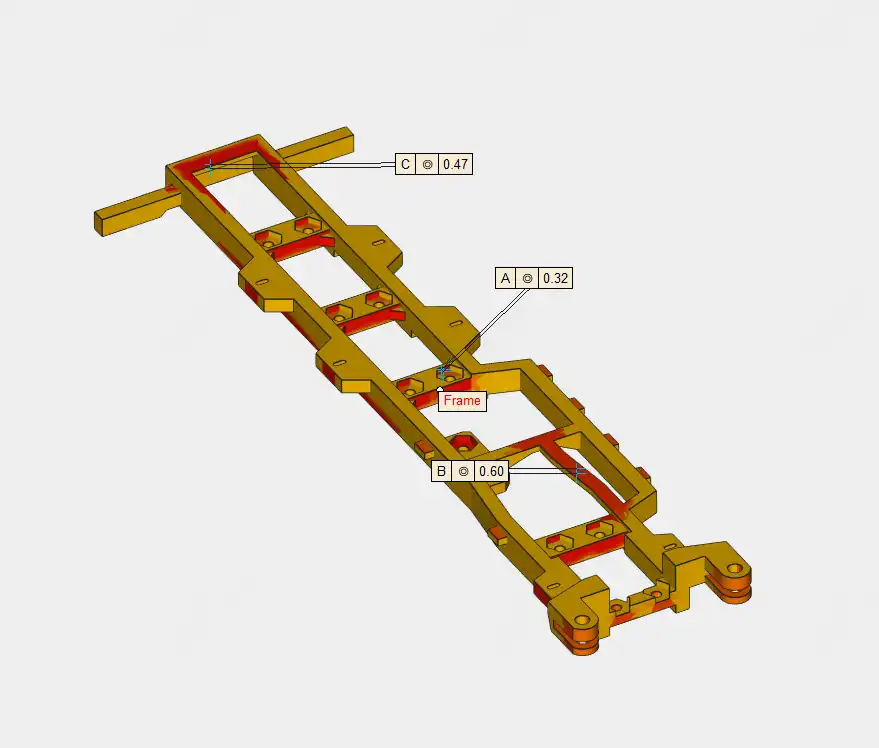
For metal SLM printing, the features of the model shall not be smaller than 1.5mm, 2mm preferrable, and the online viewer highlights the parts that are smaller/thinner (or at least it used to before, I don’t see it now for some reason). My model is full of features that are much finer, so during the review I got a request to accept possible risks that the model will come out imperfect.
Costs and duration
3D printing of this model costs around $8. Economy shipping discount covers 3DP orders too, so shipping can cost around $3 if the model is light enough. Around $3 is added on top of this as taxes and duties.
Stated manufacturing duration is 3 working days (72h), but in my case it took around 10. Interestingly, around 7 days were spent in QC step, and steps to actually print the model took promised 3 days. Seems QC was the bottleneck at the moment.
The package arrived in the same blue JLCPCB box delivered by same shipping company, as PCBs.
Review
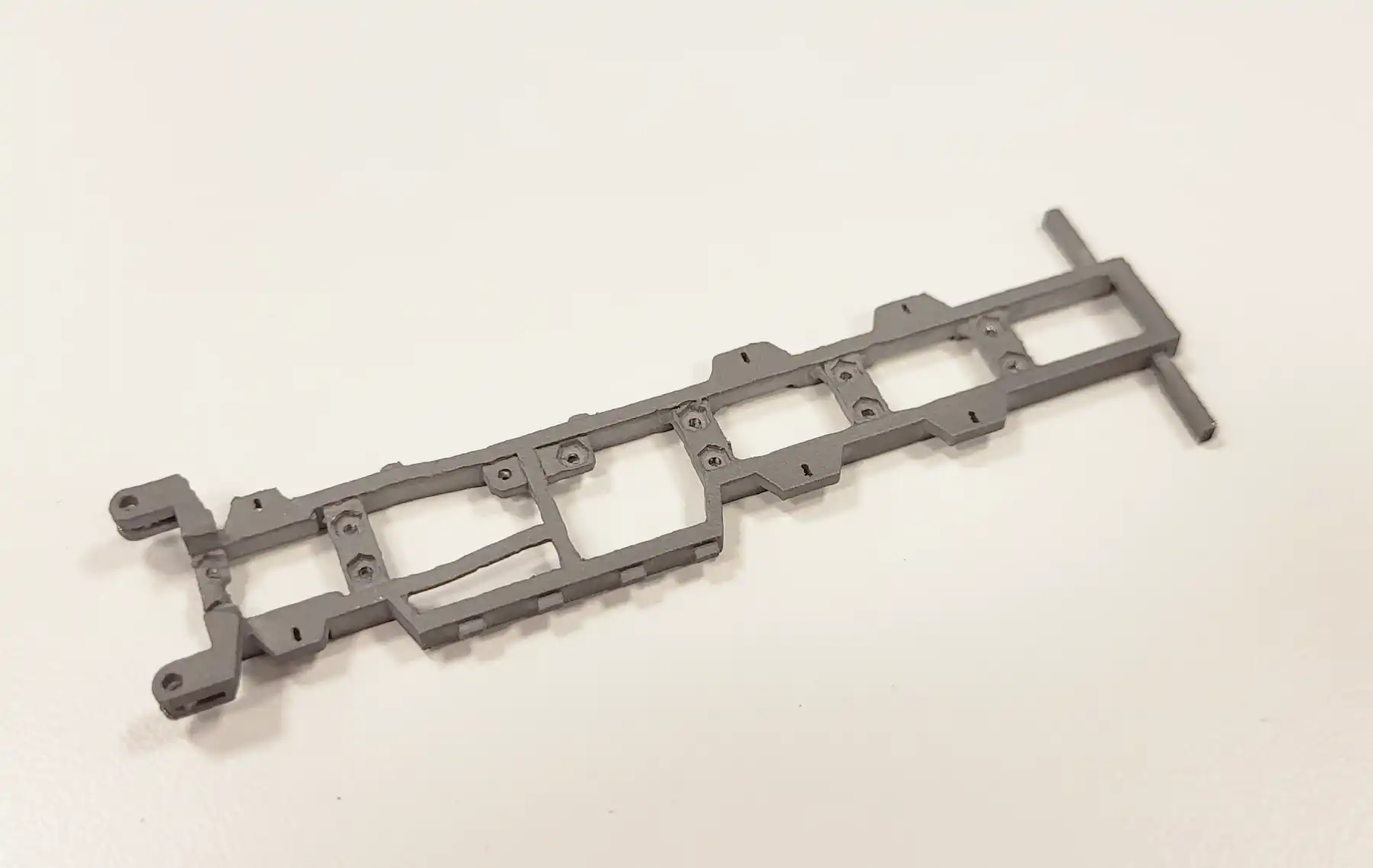
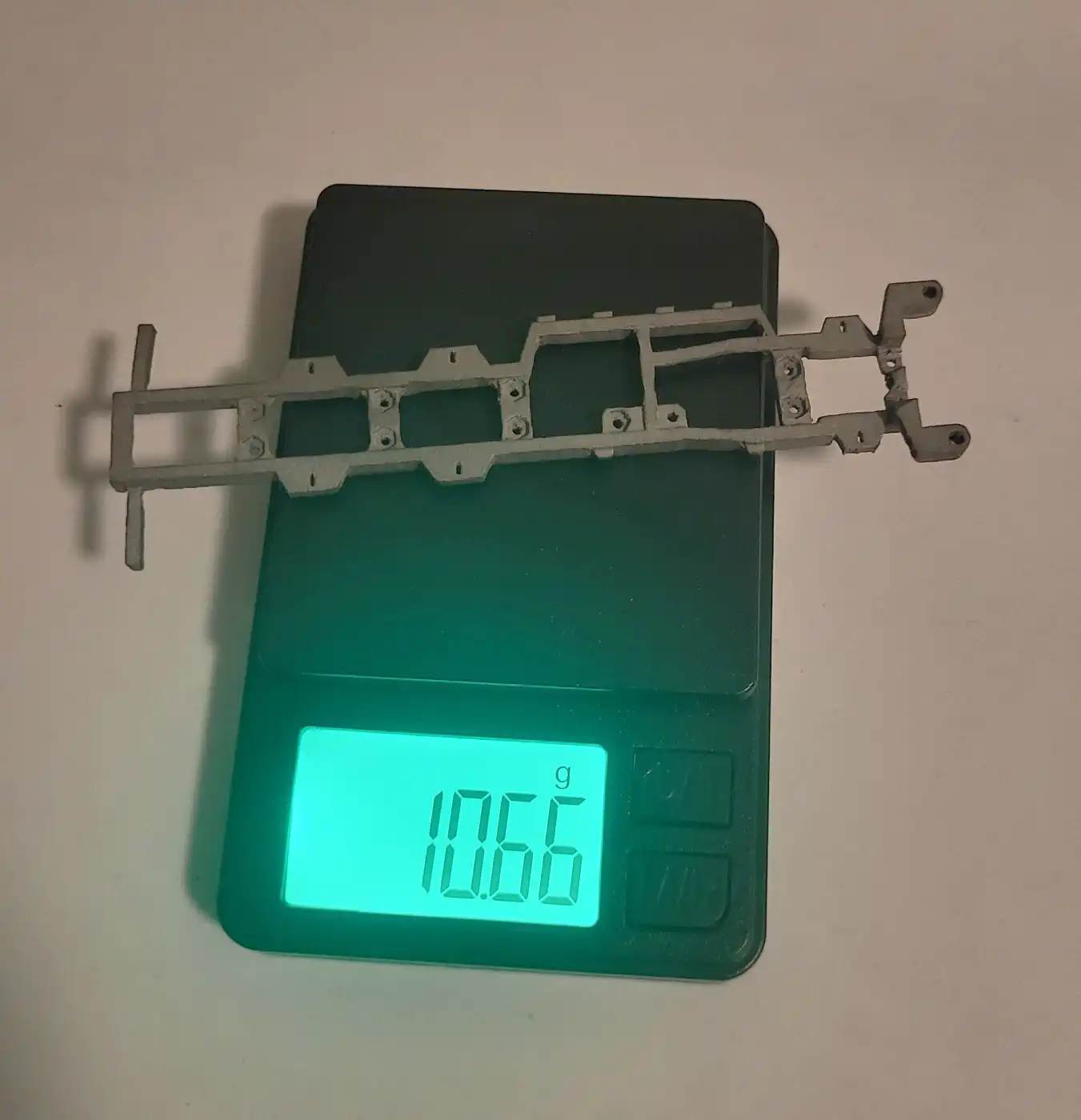
The WOW effect is definitely there! It is immediately clear that this is a metal part, with noticeable weight and strength. No doubt that it can handle everything that a scale model truck can load it with, and much more.
However, cool factor, weight and strength are nearly the only advantages over resin printing.
Surface quality and detail representation is significantly worse then for resin 3D print. This is expected, but still disappointing. The surface is very rough.
Geometrically, the print is not very true to the model Holes came out smaller than designed; my typical 1.1mm hole was not large enough for an M1 screw. Out of 2 gaps of 0.3mm, one was completely jammed with metal bits, another was ok.
It’s clear that much looser tolerances must be designed in for metal printing, compared to resin printing. In general, all the features are 0.1—0.2mm larger, so this must be compensated in the model.
Some protruding parts were warped or bent. Luckily, this was easily fixed by bending them back with pliers and vise (which is in stark contrast to resin prints).
316 steel is rather difficult to work with. I broke nearly all my 1mm drillbits while trying to enlarge the holes. (but then, they were PCB-orientd drillbits, not intended for any steel, let alone 316 grade).
Second order
Because I was gifted with a coupon for 3D printing, I decided to order the model again, after making sure that the holes are bigger and tolerances looser. This time manufacturing went much faster, around 3 days as promised.
This time the coupon did not stack with economy shipping offer, so in total the order ended up costing more than the first one (but still cheap for what it offers). Seems this is the new change in 2026, as there was an announcement that coupons now can cover shipping costs (they didn’t before), and seemingly as a result, the ability to use economy shipping discount with coupons was sacrificed.
Surpringly, the quality of the print was much worse that the first print. There is a lot more warping, and the surface quality is poorer in general. It seems the engineers placed this model at ~45 deg angle, as is visible from the layer lines. The first order was printed flat, and came out much better. So, for posterity, during the review process, try to ask to put the model flat.
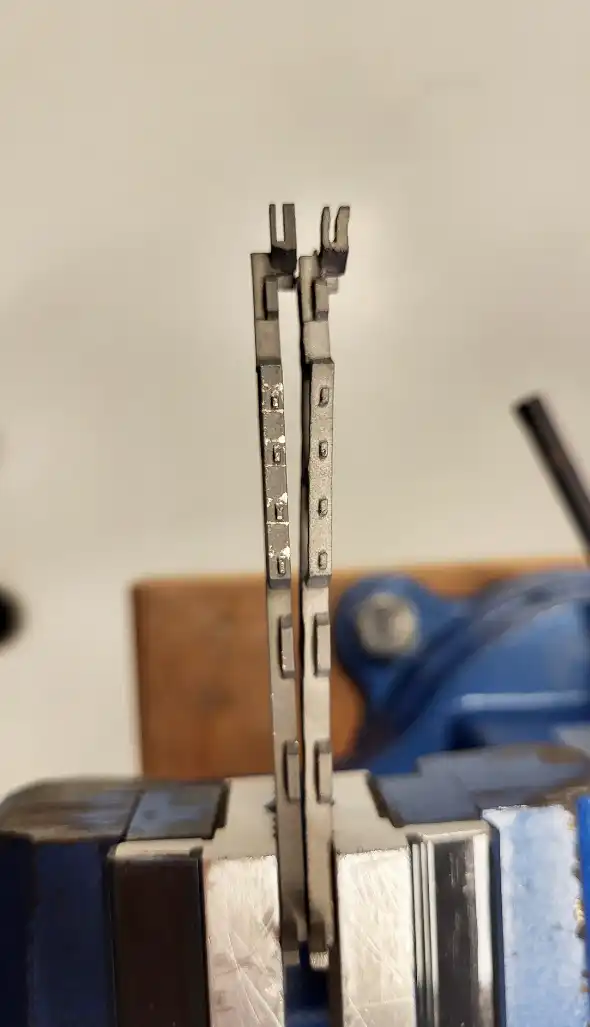
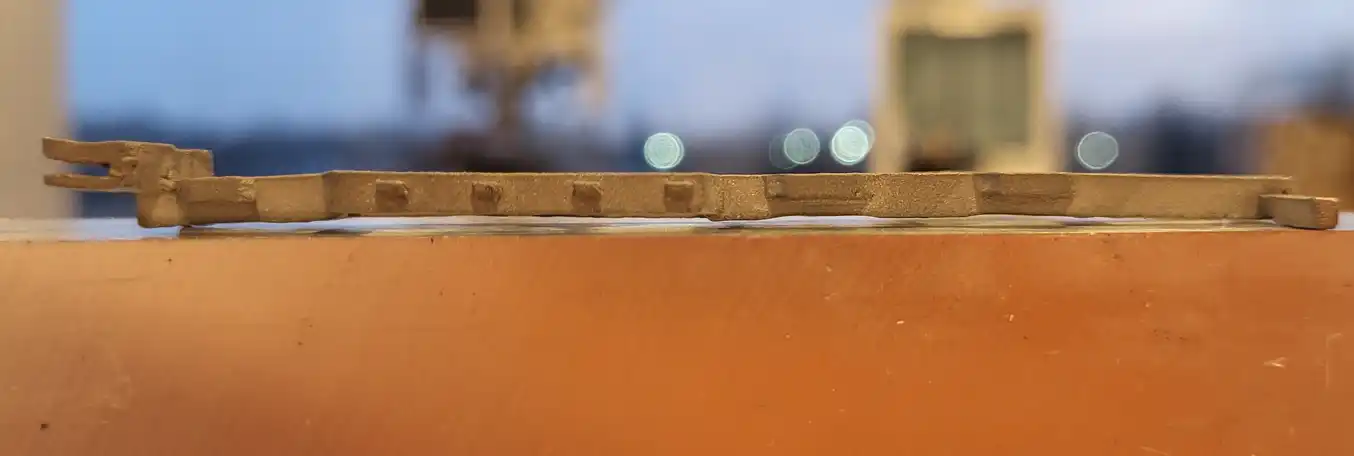
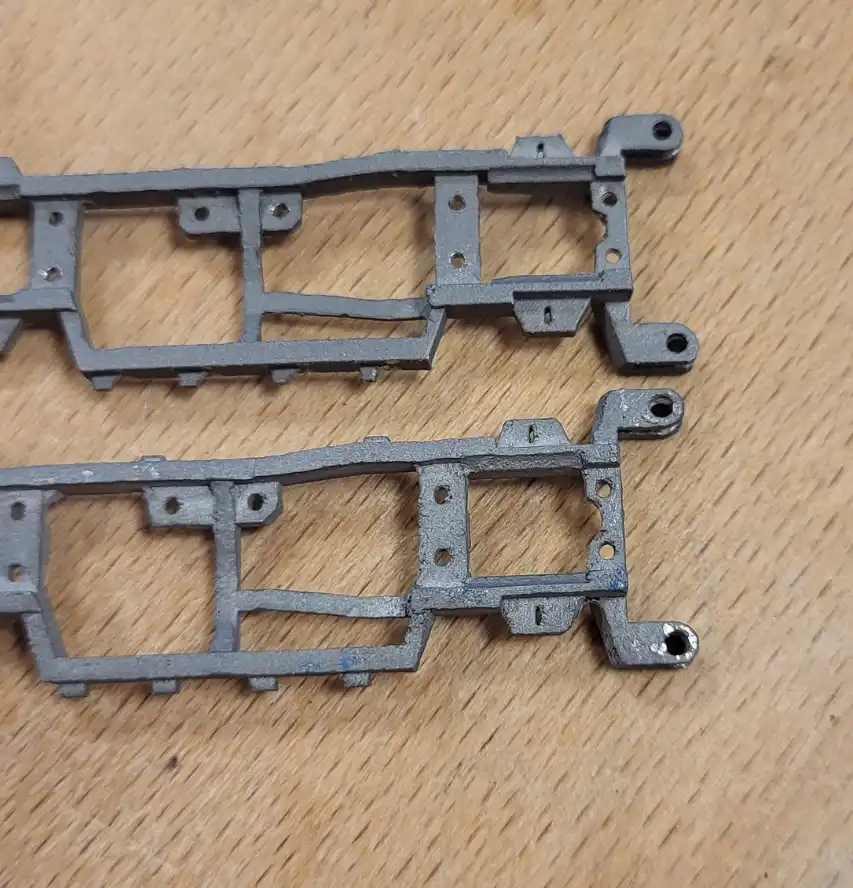
The screw holes are good this time, but out of 2 thin slots (which I made larger), one was again filled with metal. I was able to open it with a small slot screwdriver and a hammer.